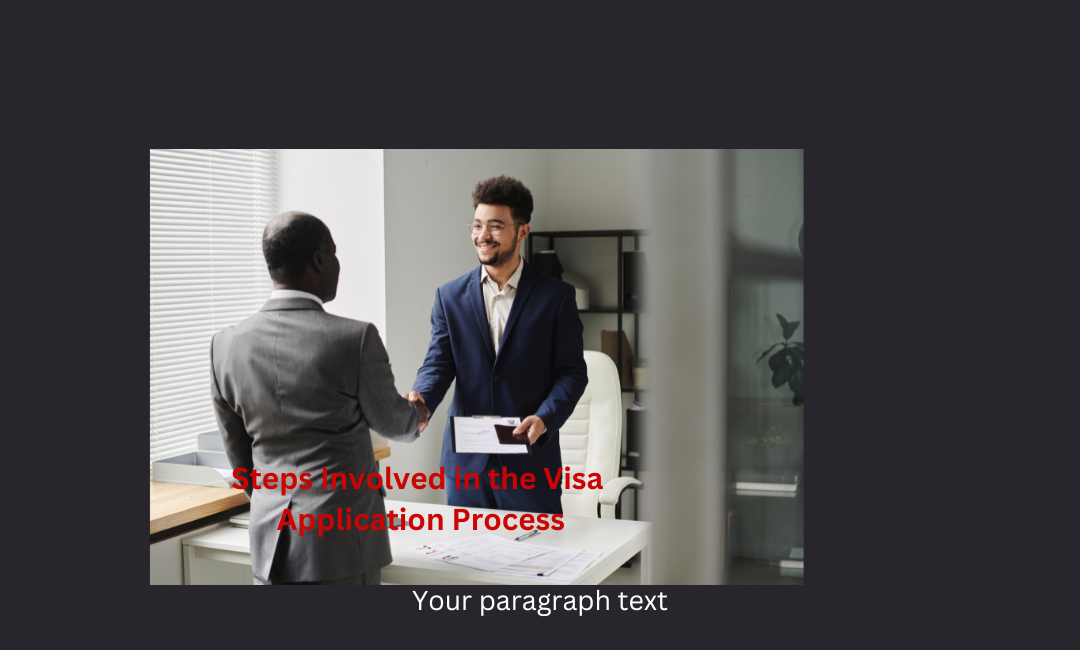
introduction Steps Involved in the Visa Application Process
The dream of traveling to a foreign country, whether for leisure, education, work, or family, often begins with securing a visa. A visa acts as a gateway, granting you legal permission to enter, stay, or transit through a nation for a specified purpose and duration. However, for many individuals, the visa application process can seem daunting, filled with unfamiliar terms, complex procedures, and stringent requirements. Understanding the steps involved is essential to navigate the process confidently and avoid common pitfalls that could delay or jeopardize your application.
The visa application process is not a one-size-fits-all procedure. It varies significantly based on the type of visa you need, the country you are applying to, and your unique circumstances. For example, applying for a tourist visa to visit the picturesque cities of Europe differs greatly from applying for a work visa to launch a career in the United States. Despite these variations, the fundamental steps involved in the application process remain largely consistent and can be broken down into manageable stages.
Preparation is the cornerstone of any successful visa application. It begins with identifying the specific visa type that aligns with your travel goals. Whether you’re planning a short vacation, pursuing higher education, or seeking employment abroad, understanding the requirements of your visa category sets the tone for the entire process. Armed with the right information, applicants can streamline their efforts, gather necessary documents, and present a compelling case to immigration authorities.
At the heart of the process lies the submission of a complete and accurate application, supported by robust documentation. This stage requires careful attention to detail, as even minor errors or missing documents can lead to delays or outright rejection. From ensuring your passport’s validity to providing proof of financial stability, each document serves as evidence of your eligibility and intent. For applicants facing additional requirements such as interviews or biometric data collection, thorough preparation can make all the difference in ensuring a smooth experience.
It’s also important to acknowledge that the visa application process doesn’t end with submission. Tracking your application’s status, addressing potential queries from the embassy or consulate, and preparing for travel are equally critical steps. For those whose applications are denied, understanding the reasons for rejection and how to address them effectively is vital for reapplication or appeals. A rejection, while disheartening, is not the end of the road but rather an opportunity to improve and succeed in subsequent attempts.
By breaking down the visa application process into clear, actionable steps, this guide aims to demystify the procedure and empower applicants with the knowledge they need to achieve their travel aspirations. Whether you are a first-time traveler or someone seeking to revisit the process for a different purpose, understanding these steps will not only boost your confidence but also increase your chances of securing a visa. With careful planning, attention to detail, and persistence, you can transform the often-intimidating visa process into a straightforward path to your goals.
Steps Involved in the Visa Application Process
A Comprehensive Guide Applying for a visa may take slightly different depending on the country of travel, sort of visa, or even the individual case. However, most of the countries have set structured system that help to assess the applicants’ purpose of travel, required documentation and eligibility etc. Here is a detailed and comprehensive guide that will assist SMEs in experiencing a broad understanding of the process from the initial stage to the final.
Determine the Type of Visa You Need
The first and most crucial step is identifying the correct visa type based on your purpose of travel. Common visa categories include, Steps Involved in the Visa Application Process.
Tourist Visa: For leisure or short-term visits.
Business Visa: For professional activities like meetings or conferences.
Student Visa: For studying in another country.
Work Visa: For employment opportunities abroad.
Family or Dependent Visa: For joining family members residing in another country.
Permanent Residency Visa: For long-term or permanent settlement.
Each visa type has unique requirements, so ensure you choose the one that aligns with your travel goals.
2. Research Country-Specific Requirements
Every country has specific criteria for visa approval. Visit the official website of the embassy or consulate of your destination country to gather accurate and updated information. Key factors to research include:
Required documents.
Processing times.
Visa fees and payment methods.
Whether an interview is required.
Ensure you understand the policies for the specific visa category to avoid delays or rejections, Steps Involved in the Visa Application Process.
Collect Required Documents
Proper documentation is the foundation of a successful visa application. While requirements vary, common documents include, Steps Involved in the Visa Application Process.
Passport: Ensure it is valid for at least six months beyond your planned stay and has sufficient blank pages.
Visa Application Form: Fill it out accurately and legibly. Many countries now offer online forms.
Photographs: Passport-sized photos meeting the destination country’s specifications.
Financial Proof: Bank statements, payslips, or sponsorship letters to demonstrate financial stability.
Proof of Purpose:
Tourist: Itinerary, hotel bookings, and return flight tickets.
Student: Admission letter from the educational institution.
Work: Offer letter or employment contract.
Travel Insurance: Coverage for medical emergencies and repatriation (required by some countries, like those in the Schengen area).
Supporting Documents: Marriage certificates, proof of property ownership, or employer reference letters to establish ties to your home country.
Use a checklist to ensure you gather all required documents and that they meet the guidelines.
Fill Out the Visa Application Form
This step requires attention to detail, Steps Involved in the Visa Application Process.
Accuracy is Key: Ensure all information matches your supporting documents.
Honesty Matters: Provide truthful answers, as discrepancies can lead to rejection.
Digital vs. Paper Forms: Some countries require online applications, while others may accept paper forms. Follow the instructions carefully.
Save a copy of your completed form for your records, Steps Involved in the Visa Application Process, Steps Involved in the Visa Application Process.
Pay the Visa Fee
Most visa applications require a non-refundable processing fee. Payment methods vary but typically include, Steps Involved in the Visa Application Process.
Online payment via credit/debit card.
Bank transfer.
In-person payment at a visa application center or embassy.
Keep the payment receipt as proof of transaction.
Schedule an Appointment
For countries requiring biometric data (e.g., fingerprints) or in-person interviews, you must book an appointment. This can usually be done online.
Choose a convenient date and time.
Arrive early to avoid any last-minute complications.
Bring a printed appointment confirmation along with your documents.
Attend the Biometric Appointment or Interview
Depending on the visa type and destination, you may be required to, Steps Involved in the Visa Application Process.
Submit Biometric Data: Fingerprints and photographs at a visa application center.
Attend an Interview: Provide additional information about your travel plans.
Tips for Interviews
Dress professionally and arrive on time.
Be clear and concise when answering questions.
Carry original documents to support your answers.
Submit Your Application
You will either
Submit your application in person at an embassy, consulate, or visa application center, Steps Involved in the Visa Application Process.
Submit documents online through the country’s official visa portal, Steps Involved in the Visa Application Process.
Ensure all forms and documents are complete and correctly formatted. Incomplete applications are a common reason for delays or rejections.
Track Your Application Status
After submission, most countries provide a tracking system, Steps Involved in the Visa Application Process.
Use your application reference number to monitor progress, Steps Involved in the Visa Application Process.
Stay alert for updates via email or SMS, Steps Involved in the Visa Application Process.
Processing times can range from a few days to several weeks, depending on the visa type.
Collect Your Visa or Receive a Decision
Once your application is processed, you will either:
Receive your visa stamped in your passport.
Be informed of a rejection with reasons provided.
For approved applications:
Verify the details on your visa, such as validity dates and the number of entries allowed.
Note any conditions or restrictions attached to your visa.
Address Rejections or Appeals (If Necessary)
If your visa is rejected:
Review the reasons in the rejection notice.
Gather additional documentation or correct errors.
Reapply or file an appeal if the country allows it.
Remember, rejection is not the end of the road. Many applicants succeed on their second attempt by addressing the issues.
Prepare for Your Trip
Once you receive your visa, start preparing for your journey:
Book flights and accommodations.
Ensure your travel insurance is active.
Pack all necessary documents, including your passport, visa, and supporting papers.
Comply with Visa Conditions
While traveling, adhere to the terms of your visa. Violations, such as overstaying or working on a tourist visa, can lead to fines, deportation, or bans on future applications.
Expanding the Steps in the Visa Application Process
To offer more detailed guidance, let’s delve further into each step, highlighting essential tips, common pitfalls, and additional considerations to ensure a seamless visa application process.
Determine the Type of Visa You Need
When choosing the visa type, it’s crucial to understand the subcategories within each visa class. For instance:
Tourist Visas may include single-entry, multiple-entry, or transit visas.
Work Visas might differ for temporary, seasonal, or long-term employment.
Student Visas can vary based on the level of education, such as undergraduate, postgraduate, or vocational training.
Pro Tip: Some countries offer visa-waiver programs for certain nationalities. Check if you qualify before starting the application process.
Research Country-Specific Requirements
Immigration policies can change frequently. In addition to embassy websites, consult:
Official government travel advisories.
Immigration consultants or experts.
Forums or communities of previous applicants for real-life insights.
Common Pitfalls:
Assuming that requirements for one country will apply to another.
Overlooking mandatory vaccinations or health certificates required for specific destinations.
Collect Required Documents
Common Challenges and Solutions:
Financial Proof:
Problem: Lack of sufficient funds or fluctuating account balances.
Solution: Maintain a stable balance for at least three months and include proof of regular income (e.g., salary slips).
Proof of Accommodation:
Problem: Uncertainty about where to stay.
Solution: Book refundable accommodations or provide a host’s invitation letter.
Ties to Home Country:
Problem: Insufficient evidence of intent to return.
Solution: Include proof of ongoing employment, property ownership, or family obligations.
Pro Tip: Create a well-organized folder with labeled sections for quick reference during submission or interviews.
Fill Out the Visa Application Form
Mistakes to Avoid:
Typographical errors in personal details like your name or passport number.
Skipping non-mandatory fields that could provide helpful context for your application.
Providing inconsistent information compared to your supporting documents (e.g., mismatched travel dates).
Pro Tip: Save your progress regularly if filling out an online form, as some portals may time out.
Pay the Visa Fee
Key Considerations:
Some countries offer expedited processing for an additional fee.
Keep in mind that fees are non-refundable, even if your application is rejected.
Pro Tip: Double-check payment methods accepted by the embassy or visa center to avoid delays.
Schedule an Appointment
When to Schedule:
During peak travel seasons, appointment slots fill up quickly. Book as early as possible.
Check if walk-in appointments are an option if you’re on a tight timeline.
Pro Tip: Carry a checklist of required documents to avoid missing anything on the day of your appointment.
Attend the Biometric Appointment or Interview
Biometric Submission:
Be prepared for long wait times at visa centers. Arrive early and bring water or snacks if allowed.
Follow the instructions for biometric capture, such as removing glasses or tying back your hair.
Interview Tips:
Practice common questions, such as:
Why are you traveling?
Who is funding your trip?
What is your travel itinerary?
Maintain a calm and polite demeanor, even if asked challenging questions.
Pro Tip: Rehearse answers that align with the purpose of your visa. Avoid giving vague or overly detailed responses.
Submit Your Application
If submitting in person:
Double-check that all documents are in the correct order.
Verify that your passport includes the required blank pages for the visa stamp.
If submitting online:
Ensure all scanned documents meet the resolution and format requirements (e.g., PDF or JPEG).
Track Your Application Status
Common Tracking Tools:
Online portals provided by the embassy or visa application centers.
SMS or email notifications for updates.
Pro Tip: Avoid contacting the embassy for status inquiries unless there is a delay beyond the estimated processing time.
Collect Your Visa or Receive a Decision
If Approved:
Confirm the accuracy of details such as name, dates, and visa type.
Note any conditions, like restrictions on employment or travel outside the issuing country.
If Denied:
Most rejection letters provide clear reasons for the decision. Focus on addressing these issues in future applications.
Pro Tip: Avoid rushing into a reapplication without fully resolving the issues cited in the rejection notice.
Address Rejections or Appeals (If Necessary)
Understanding Appeals:
Some countries allow appeals, but they often require legal or professional representation.
Appeals typically involve presenting new evidence or clarifications, so prepare meticulously.
Reapplication Strategy:
Improve your documentation based on feedback from the previous rejection.
Consider seeking guidance from a visa consultant or legal expert for complex cases.
Prepare for Your Trip
Final Preparations:
Make multiple copies of your visa, passport, and important documents.
Familiarize yourself with customs regulations, prohibited items, and entry requirements.
If required, pre-register with local authorities or carry specific forms like arrival cards.
Pro Tip: Store both physical and digital backups of your travel documents to safeguard against loss or theft.
Comply with Visa Conditions
Obtaining a visa is a significant step toward achieving your travel or relocation goals, but the responsibility doesn’t end once your visa is approved. Complying with the conditions outlined in your visa is critical to ensuring a successful and trouble-free stay in your destination country. Failing to adhere to these conditions can have serious consequences, including fines, deportation, or bans on future visa applications. Below is an expanded guide to understanding and abiding by visa conditions.
Understand the Terms and Conditions of Your Visa
Every visa comes with specific rules and limitations, which vary depending on the type of visa and the issuing country. These conditions are often listed in your visa approval notice, the visa sticker or stamp in your passport, or the official documents provided by the immigration authorities.
Key Elements to Review:
Validity Period: The dates your visa is valid for entry and exit.
Number of Entries: Whether your visa allows single entry, multiple entries, or double entries.
Purpose of Stay: Activities permitted under your visa type, such as studying, working, or tourism.
Restricted Areas: Some countries may restrict visa holders from visiting specific regions or locations.
Work or Study Authorization: Whether your visa allows part-time or full-time work or study.
Pro Tip: If you’re unsure about any aspect of your visa conditions, seek clarification from the embassy, consulate, or immigration office of the issuing country.
Avoid Overstaying Your Visa
Overstaying is one of the most common violations of visa conditions and can have severe repercussions. Even a single day beyond your authorized stay can lead to penalties.
Consequences of Overstaying:
Fines: Many countries impose financial penalties for each day of overstay.
Travel Bans: You may be barred from re-entering the country for months or even years.
Deportation: Immigration authorities may deport you at your own expense.
Visa Application Rejections: Overstaying can negatively impact future visa applications for any country.
Tips to Avoid Overstaying:
Set reminders for your visa’s expiry date.
Apply for an extension well in advance if you need more time.
Keep track of entry and exit stamps to calculate your stay accurately.
Engage Only in Activities Permitted by Your Visa Type
Your visa is issued for a specific purpose, and engaging in activities outside the scope of your visa can result in penalties.
Examples of Non-Compliance:
Working on a tourist visa.
Attending school on a visitor visa without proper authorization.
Engaging in business activities on a tourist visa without the required permits.
Pro Tip: If your plans change during your stay (e.g., you find a job or decide to study), consult with the local immigration office about changing your visa type.
Follow Local Laws and Regulations
Adhering to the laws of your host country is a fundamental condition of your visa. Violating local laws, even unintentionally, can result in visa cancellation or legal action.
Common Areas to Watch:
Traffic laws: Ensure you have a valid international or local driving license, Steps Involved in the Visa Application Process.
Employment laws: Do not work without proper authorization, Steps Involved in the Visa Application Process.
Tax compliance: Pay any taxes owed if you’re working or earning income in the country, Steps Involved in the Visa Application Process.
Pro Tip: Familiarize yourself with cultural norms and laws that may differ significantly from those in your home country, Steps Involved in the Visa Application Process.
Update Immigration Authorities on Changes in Circumstances
If there are any changes to your situation, you must notify the appropriate authorities. Failure to do so can lead to complications, Steps Involved in the Visa Application Process.
Examples of Changes to Report:
Address changes: Many countries require you to register your new address with immigration authorities, Steps Involved in the Visa Application Process.
Changes in employment status: If you lose or change your job, inform the authorities, Steps Involved in the Visa Application Process.
Marital status changes: If you marry or divorce during your stay, update your records, Steps Involved in the Visa Application Process.
Pro Tip: Keep copies of all communication with immigration authorities to ensure transparency and accountability.
Renew or Extend Your Visa When Necessary
If your visa is approaching its expiration date and you need to stay longer, you may be eligible to apply for an extension or renewal.
Steps to Extend Your Stay:
Start Early: Begin the process several weeks before your visa expires, Steps Involved in the Visa Application Process.
Check Eligibility: Ensure your visa type allows extensions, Steps Involved in the Visa Application Process.
Provide Justification: Submit documents proving the necessity of your extended stay, such as medical reports, employer letters, or proof of ongoing studies.
Pro Tip: Avoid last-minute applications, as delays in processing could result in overstaying penalties, Steps Involved in the Visa Application Process.
Maintain Proper Documentation at All Times
During your stay, you may be required to present identification or proof of your visa status. Carry essential documents with you or keep digital copies accessible, Steps Involved in the Visa Application Process.
Must-Have Documents:
Passport with visa sticker or stamp, Steps Involved in the Visa Application Process.
Proof of residency or address, Steps Involved in the Visa Application Process.
Any work permits, student IDs, or travel insurance details, Steps Involved in the Visa Application Process.
Pro Tip: Keep originals stored securely and carry notarized copies when traveling within the country.
Prepare for Departure Before Your Visa Expires
Planning your exit well in advance of your visa’s expiration date demonstrates compliance with immigration rules.
Checklist for Departure:
Confirm your travel plans and ticket dates.
Return all borrowed items or settle obligations, such as paying rent or closing bank accounts. Ensure you leave the country on or before the last valid date of your visa.
Be Aware of Re-Entry Rules
If your visa allows multiple entries, check the rules governing re-entry. Some countries impose specific conditions, such as:
Minimum time required between exits and re-entries.
Proof of ongoing eligibility for your visa type.
Pro Tip: Keep records of previous entries and exits to avoid misunderstandings at immigration checkpoints.
Seek Legal Advice if Issues Arise
If you encounter problems, such as visa expiration or disputes with immigration authorities, seek professional legal counsel. Immigration lawyers or consultants can guide you on next steps and help you resolve issues efficiently.
Common Conditions to Watch For:
Avoid overstaying, as even a single day can lead to penalties or bans, Steps Involved in the Visa Application Process.
Do not engage in activities prohibited by your visa type (e.g., working on a tourist visa).
Notify local immigration authorities if your circumstances change, such as extending your stay, Steps Involved in the Visa Application Process.
Additional Resources and Tools
Official Embassy Websites: For accurate and updated information, Steps Involved in the Visa Application Process.
Visa Application Centers (VACs): Often provide detailed instructions and FAQs, Steps Involved in the Visa Application Process.
Immigration Consultants: Can assist with complex cases or reapplications, Steps Involved in the Visa Application Process.
Mobile Apps: Some countries offer apps to track applications or prepare for interviews, Steps Involved in the Visa Application Process.
Conclusion
Applying for a visa is a meticulous process that requires planning, attention to detail, and persistence. By understanding each step and taking proactive measures to prepare your application, you can significantly increase your chances of success. Whether traveling for leisure, study, work, or family reunification, a well-prepared visa application sets the stage for a smooth and enjoyable journey.