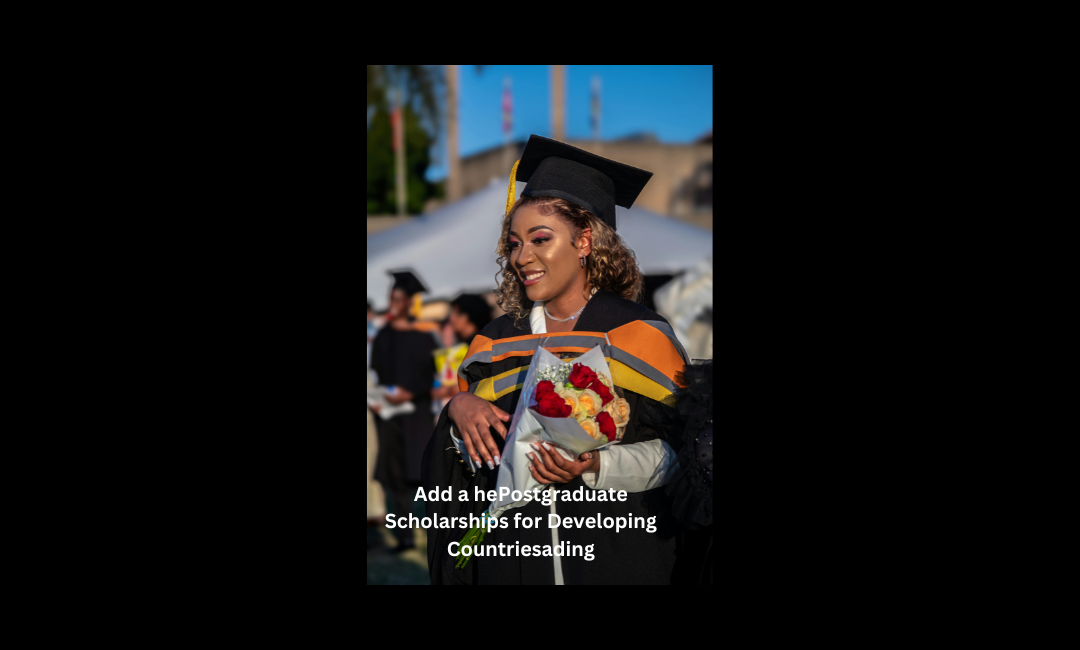
Postgraduate Scholarships for Developing Countries
Higher education is often regarded as the cornerstone of economic development, innovation, and social progress. However, for many individuals in developing countries, access to quality education—especially at the postgraduate level—remains a significant challenge due to financial constraints. Postgraduate scholarships for developing countries play a pivotal role in bridging this gap, offering talented and ambitious students the opportunity to pursue advanced degrees and contribute to the growth and transformation of their communities.
These scholarships are not merely financial aid packages; they are investments in human potential and sustainable development. They enable students from underprivileged backgrounds to study in world-class institutions, access cutting-edge research facilities, and build global networks that can have far-reaching impacts on their personal and professional lives.
Postgraduate scholarships often emphasize fields that are crucial for the development of these nations, such as engineering, healthcare, education, agriculture, and environmental studies. They aim to nurture leaders, innovators, and changemakers who can address pressing global challenges and create a brighter future for their countries. This article delves into the importance of postgraduate scholarships for developing countries, highlights prominent scholarship programs, and provides guidance on how to maximize your chances of securing one.
The Importance of Postgraduate Scholarships for Developing Countries
Promoting Access to Quality Education
Postgraduate scholarships break down financial barriers, allowing students to access education at prestigious institutions they might otherwise be unable to afford.
Developing Human Capital
These scholarships empower individuals to gain advanced knowledge and skills, fostering a pool of highly qualified professionals who can contribute to their country’s development.
Addressing Global Challenges
Scholarship programs often prioritize fields such as climate change, public health, technology, and sustainable development, enabling scholars to tackle issues that affect both their communities and the world at large.
Encouraging Research and Innovation
Postgraduate scholarships frequently include funding for research, which helps scholars contribute to scientific and technological advancements in their home countries.
Building International Networks
Scholars often gain exposure to diverse cultures and perspectives, building global connections that can lead to international collaborations and partnerships.
Promoting Social Mobility
By providing opportunities for education, scholarships help individuals from disadvantaged backgrounds break the cycle of poverty and achieve upward mobility.
Types of Postgraduate Scholarships
Merit-Based Scholarships
Awarded to students with exceptional academic achievements or significant accomplishments in their field of study.
Need-Based Scholarships
Targeted at students from low-income families or underprivileged backgrounds to ensure equitable access to higher education.
Field-Specific Scholarships
Designed for students pursuing specific disciplines, such as healthcare, engineering, or environmental sciences, that are vital for national development.
Government-Funded Scholarships
Many countries provide scholarships to students from developing nations as part of their foreign aid and development programs.
University-Specific Scholarships
Individual universities offer scholarships to attract talented students from developing countries.
Organization-Sponsored Scholarships
Non-governmental organizations, foundations, and corporations often fund scholarships to support global education and development initiatives.
Notable Postgraduate Scholarships for Developing Countries
Chevening Scholarships (UK)
Funded by the UK government, these scholarships support outstanding students from developing countries to pursue postgraduate degrees in the UK.
Covers tuition fees, living expenses, travel costs, and more.
Focuses on leadership development and building strong ties between the UK and developing nations.
DAAD Scholarships (Germany)
Offered by the German Academic Exchange Service, these scholarships support students from developing countries in pursuing master’s or PhD degrees in Germany.
Emphasizes fields like engineering, public policy, and sustainable development.
Commonwealth Scholarships (UK)
Funded by the Commonwealth Scholarship Commission, these scholarships are open to citizens of Commonwealth nations.
Covers tuition, living costs, and travel expenses for master’s and PhD programs.
Fulbright Foreign Student Program (USA)
Sponsored by the U.S. government, this program supports students from developing countries in pursuing postgraduate studies or research in the United States.
Provides full funding for tuition, travel, and living expenses.
Australia Awards
Funded by the Australian government, these scholarships support postgraduate studies in Australia for students from Asia, Africa, the Pacific, and other developing regions.
Prioritizes fields that align with sustainable development goals.
Erasmus Mundus Joint Master Degrees (EU)
Offers fully funded scholarships for international students to study in multiple European countries through joint master’s programs.
Encourages cultural exchange and academic excellence.
Rotary Peace Fellowships
Provides funding for master’s programs in peace studies, conflict resolution, and related fields at selected universities worldwide.
Aimed at fostering global peace and understanding.
Tips for Securing a Postgraduate Scholarship
Research Thoroughly
Identify scholarships that align with your academic background, career aspirations, and personal circumstances.
Prepare a Strong Application
Highlight your achievements, leadership potential, and commitment to making a difference in your community.
Tailor your personal statement to reflect the goals and priorities of the scholarship program.
Seek Stellar Recommendations
Obtain letters of recommendation from professors, employers, or mentors who can vouch for your abilities and character.
Focus on Language Proficiency
Ensure you meet the language requirements (e.g., IELTS, TOEFL) for the scholarship and host institution.
Demonstrate Commitment to Your Community
Many scholarships prioritize candidates who show a clear commitment to using their education to benefit their home country.
Start Early
Scholarship applications often require extensive documentation and preparation. Begin your research and application process well in advance of the deadlines.
Benefits of Postgraduate Scholarships
Comprehensive Financial Support
Covers tuition fees, living expenses, travel costs, and sometimes research funding.
Global Exposure
Allows students to experience different cultures, academic environments, and professional networks.
Personal Growth
Develops critical thinking, leadership, and problem-solving skills.
Enhanced Career Opportunities
A postgraduate degree from a reputable institution significantly boosts employability and earning potential.
Making a Difference
Equips scholars with the tools to contribute meaningfully to their communities and drive sustainable development.
Challenges and How to Overcome Them
Competitive Nature
Scholarships for developing countries are highly competitive. Focus on building a strong academic profile and unique application.
Adapting to a New Environment
Studying abroad can be challenging. Seek support from university resources and fellow students to ease the transition.
Balancing Academics and Personal Life
Time management is crucial. Prioritize tasks and maintain a healthy work-life balance.
Higher education has long been recognized as a driver of individual empowerment, societal development, and global progress. For individuals in developing countries, pursuing postgraduate studies often represents a transformative opportunity to acquire advanced knowledge and skills. However, financial barriers frequently prevent talented students from accessing the education they need to contribute meaningfully to their communities and the global workforce.
Postgraduate scholarships for developing countries address this critical issue by providing financial aid, mentorship, and resources to students who demonstrate academic potential and a commitment to positive change. These scholarships enable students to study in world-renowned universities, collaborate with leading academics and researchers, and gain exposure to global networks. Many of these programs focus on disciplines crucial to the sustainable development of emerging economies, such as public health, environmental science, engineering, technology, and social policy.
By empowering students from underprivileged backgrounds, postgraduate scholarships contribute to the achievement of global goals, including reducing poverty, promoting innovation, and addressing challenges such as climate change and healthcare disparities. This article explores the importance, benefits, and opportunities offered by postgraduate scholarships for developing countries while providing detailed guidance on how aspiring scholars can maximize their chances of success.
Why Postgraduate Scholarships Matter
Postgraduate scholarships for students from developing countries have a profound impact, both on the individuals who receive them and the broader global community.
Reducing Financial Barriers
For many students in developing countries, the high cost of postgraduate education is an insurmountable obstacle. Scholarships remove these financial barriers, covering tuition, living expenses, and even travel costs.
Enhancing Global Competitiveness
Postgraduate degrees equip students with advanced skills and knowledge, making them competitive in the global job market and enabling them to contribute to their countries’ economic growth.
Promoting Sustainable Development
Scholarships often prioritize fields of study that align with global challenges, such as environmental science, healthcare, and public policy. Graduates bring their expertise back to their home countries, driving development and innovation.
Fostering Leadership
Many scholarship programs emphasize leadership development, nurturing future leaders who can inspire change in their communities and beyond.
Encouraging Knowledge Transfer
Scholars who study abroad often bring back innovative ideas, advanced research methodologies, and international best practices, enriching their home countries’ academic and professional landscapes.
Supporting Global Collaboration
Postgraduate scholarships create opportunities for cultural exchange, fostering mutual understanding and collaboration between developing countries and the global academic community.
Types of Postgraduate Scholarships
Postgraduate scholarships for developing countries can be categorized based on their objectives and funding sources:
Government-Funded Scholarships
Offered by governments to strengthen diplomatic ties and support education in developing nations. Examples include the UK’s Chevening Scholarships, Australia Awards, and New Zealand Development Scholarships.
Institutional Scholarships
Provided by universities and research institutions to attract talented international students. Examples include the Gates Cambridge Scholarship and Oxford’s Clarendon Fund.
Private and Corporate Scholarships
Funded by foundations, NGOs, and corporations. Examples include the Mastercard Foundation Scholars Program and the Aga Khan Foundation International Scholarship.
Field-Specific Scholarships
Focused on particular areas of study, such as engineering, medicine, or environmental science. For instance, the Joint Japan/World Bank Graduate Scholarship Program supports fields critical to economic development.
Region-Specific Scholarships
Targeted at students from specific regions or countries. Examples include the African Union Scholarships and ASEAN Graduate Scholarships.
Notable Postgraduate Scholarship Programs
Chevening Scholarships (UK)
Fully funded scholarships for master’s degrees in the UK.
Focus on leadership development and global networking.
Cover tuition fees, living expenses, travel, and other costs.
Fulbright Foreign Student Program (USA)
Provides funding for master’s and PhD studies in the United States.
Emphasizes cultural exchange and professional development.
DAAD Scholarships (Germany)
Offers fully funded master’s and PhD scholarships in Germany.
Prioritizes sustainable development fields such as engineering, public health, and education.
Erasmus Mundus Joint Master Degrees (EU)
Fully funded scholarships for joint master’s programs across multiple European universities.
Focus on international collaboration and academic excellence.
Australia Awards
Fully funded postgraduate scholarships for students from Asia, the Pacific, Africa, and Latin America.
Focus on fields critical to regional and global development.
Commonwealth Scholarships (UK)
Target citizens of Commonwealth nations for master’s and PhD programs.
Covers tuition, travel, and living expenses.
Rotary Peace Fellowships
Offers funding for master’s programs in peace and conflict resolution.
Aims to develop global leaders committed to building peace.
Benefits of Postgraduate Scholarships
Postgraduate scholarships offer extensive benefits, enabling students to achieve academic and professional success while contributing to global progress.
Comprehensive Financial Support
Scholarships often cover tuition fees, accommodation, living expenses, travel costs, and health insurance, reducing the financial burden on students.
Exposure to Global Networks
Scholars gain access to global academic and professional networks, creating opportunities for collaboration and career advancement.
Development of Advanced Skills
Postgraduate education equips students with specialized knowledge and skills, making them valuable assets to their home countries and the global workforce.
Opportunities for Research
Many scholarships support research initiatives, enabling students to contribute to advancements in their chosen fields.
Cultural Exchange
Studying abroad fosters cross-cultural understanding, enabling scholars to become global citizens who can navigate diverse environments effectively.
Overcoming Challenges
While postgraduate scholarships offer numerous opportunities, scholars from developing countries may face challenges such as:
High Competition
Scholarship programs are highly competitive, requiring exceptional academic and extracurricular achievements.
Solution: Strengthen your application by highlighting unique accomplishments, leadership qualities, and a clear vision for your future.
Language Barriers
Many scholarships require proficiency in English or other languages.
Solution: Prepare for standardized tests like IELTS or TOEFL and consider language courses to improve fluency, Postgraduate Scholarships for Developing Countries.
Adapting to a New Environment
Cultural and academic differences can be overwhelming, Postgraduate Scholarships for Developing Countries.
Solution: Seek support from student services, join cultural groups, and connect with peers for guidance, Postgraduate Scholarships for Developing Countries.
Tips for a Successful Application
Applying for postgraduate scholarships, especially for candidates from developing countries, can be highly competitive and demanding. However, with a strategic approach and thorough preparation, you can significantly enhance your chances of success. Below are detailed tips to help you create a compelling application:
Start Early and Stay Organized
Research Opportunities: Begin your search for scholarships at least a year in advance. Use official websites, scholarship databases, and university portals to identify relevant programs, Postgraduate Scholarships for Developing Countries.
Track Deadlines: Create a calendar or checklist with application deadlines, eligibility requirements, and submission dates. Missing deadlines can disqualify you immediately, Postgraduate Scholarships for Developing Countries.
Prepare Documents: Compile necessary documents like academic transcripts, certificates, language test scores, and identification papers well ahead of time, Postgraduate Scholarships for Developing Countries.
Understand the Scholarship Requirements
Eligibility Criteria: Ensure you meet all the eligibility requirements, including nationality, academic qualifications, field of study, and language proficiency, Postgraduate Scholarships for Developing Countries.
Program Goals: Understand the scholarship’s objectives. For example, some scholarships prioritize leadership potential, community impact, or research innovation. Tailor your application to reflect these priorities, Postgraduate Scholarships for Developing Countries.
Focus on Academic Excellence
Highlight Achievements: Emphasize your academic records, research projects, or honors that demonstrate your intellectual ability, Postgraduate Scholarships for Developing Countries.
Relevant Coursework: Mention specific courses or training you’ve completed that align with the scholarship or program’s goals, Postgraduate Scholarships for Developing Countries.
Standardized Test Scores: If required, prepare for exams like GRE, GMAT, TOEFL, or IELTS well in advance and aim for high scores, Postgraduate Scholarships for Developing Countries.
Write a Strong Personal Statement
Be Authentic: Use your personal statement to tell your story, including challenges you’ve overcome, your motivations, and your aspirations.
Align with Goals: Clearly explain how the scholarship will help you achieve your career and academic objectives, and how your success will benefit your community or home country.
Show Passion and Commitment: Convey genuine enthusiasm for your field of study and the impact you wish to make.
Gather Impressive Letters of Recommendation
Choose the Right Referees: Select mentors, professors, or employers who know your capabilities well and can speak to your academic and personal strengths.
Provide Guidance: Share details about the scholarship and the qualities it seeks with your referees so they can tailor their letters accordingly.
Request Early: Give your referees ample time to write thoughtful and detailed recommendations.
Demonstrate Leadership and Community Engagement
Highlight Extracurriculars: Showcase your involvement in activities that demonstrate leadership, teamwork, or initiative, such as volunteer work, student organizations, or social projects.
Community Impact: If you’ve led or contributed to projects that address local or global challenges, emphasize these experiences and the skills you gained.
Tailor Your Application for Each Scholarship
Customize Content: Avoid generic applications. Tailor your essays, personal statements, and responses to reflect the specific values and objectives of each scholarship.
Research Sponsors: Learn about the organization or institution offering the scholarship and incorporate that knowledge into your application.
Emphasize Future Plans and Impact
Articulate Your Goals: Clearly outline your short- and long-term career goals. For example, explain how the scholarship will enable you to contribute to your field, country, or global challenges.
Showcase Potential Impact: Describe how your education will help solve issues in your home country, whether in healthcare, education, technology, or other areas.
Invest in Language Proficiency
Meet Language Requirements: Scholarships often require language proficiency in English or the language of instruction. Achieve the required scores in tests like TOEFL, IELTS, or others.
Practice Writing: Ensure your essays and application documents are written in clear, professional language. Consider having them reviewed by a mentor or editor.
Prepare for Interviews
Research Common Questions: Prepare for potential interview questions about your academic background, aspirations, leadership experiences, and knowledge of the scholarship’s goals.
Practice Responses: Conduct mock interviews with a mentor or friend to refine your answers and build confidence.
Dress Professionally: If an in-person or video interview is required, present yourself professionally and ensure you’re in a distraction-free environment.
Focus on Research Proposals (If Applicable)
Clarity and Relevance: If the scholarship requires a research proposal, ensure it is clear, concise, and aligned with the scholarship’s priorities.
Feasibility: Outline realistic objectives, methodologies, and timelines for your research.
Global Impact: Highlight how your research will contribute to solving specific problems in your home country or the world.
Use Online Tools and Resources
Scholarship Portals: Explore platforms like DAAD, Chevening, and StudyPortals for scholarship opportunities.
Essay Writing Tools: Use tools like Grammarly or Hemingway Editor to refine your essays and statements.
Free Courses: Consider taking free online courses in your field to demonstrate your proactive learning efforts.
Build a Strong Online Presence
Professional Profiles: Create or update your LinkedIn profile to reflect your academic and professional achievements.
Showcase Projects: If relevant, build a portfolio or blog to showcase your research, projects, or professional accomplishments.
Seek Feedback on Your Application
Mentor Review: Share your application materials with professors, mentors, or peers who can provide constructive feedback.
Scholarship Alumni: Reach out to past scholarship recipients for insights and tips on crafting a successful application.
Practice Persistence
Apply to Multiple Scholarships: Increase your chances of success by applying to several programs that align with your goals, Postgraduate Scholarships for Developing Countries.
Learn from Rejections: If you’re not selected, review your application, seek feedback, and refine your approach for future opportunities, Postgraduate Scholarships for Developing Countries.
Final Thoughts
A successful scholarship application requires careful planning, strong presentation, and a deep understanding of the scholarship’s objectives. By investing time and effort into these steps, you not only increase your chances of winning financial support but also position yourself as a standout candidate ready to achieve your academic and career dreams.
Conclusion
Postgraduate scholarships for developing countries are powerful tools for fostering education, innovation, and sustainable development. They not only empower individuals to achieve academic and professional success but also create ripple effects that benefit entire communities and nations. By investing in education, these scholarships pave the way for a brighter, more equitable future, addressing global challenges and advancing collective progress. Aspiring scholars should seize these opportunities to transform their lives and contribute meaningfully to the world.